Getting there
Sunamachi Ginza: street and stations
How to reach Sunamachi Ginza in Kōtō by the Tōzai line, the Toei Shinjuku line, bus or taxi, and what the shopping street is like when you arrive to eat.
Reserve a place by the ring ↗Quick answer
Take the Tokyo Metro Tōzai line to Minami-Sunamachi Station or the Toei Shinjuku line to Nishi-Ōjima Station, then walk; neither station is on the street, so allow for it. City buses stop on Sunamachi Ginza itself at Kitasuna 2-chōme, and a taxi from either station is quick. Arrive early to shop for food on the street.
By train
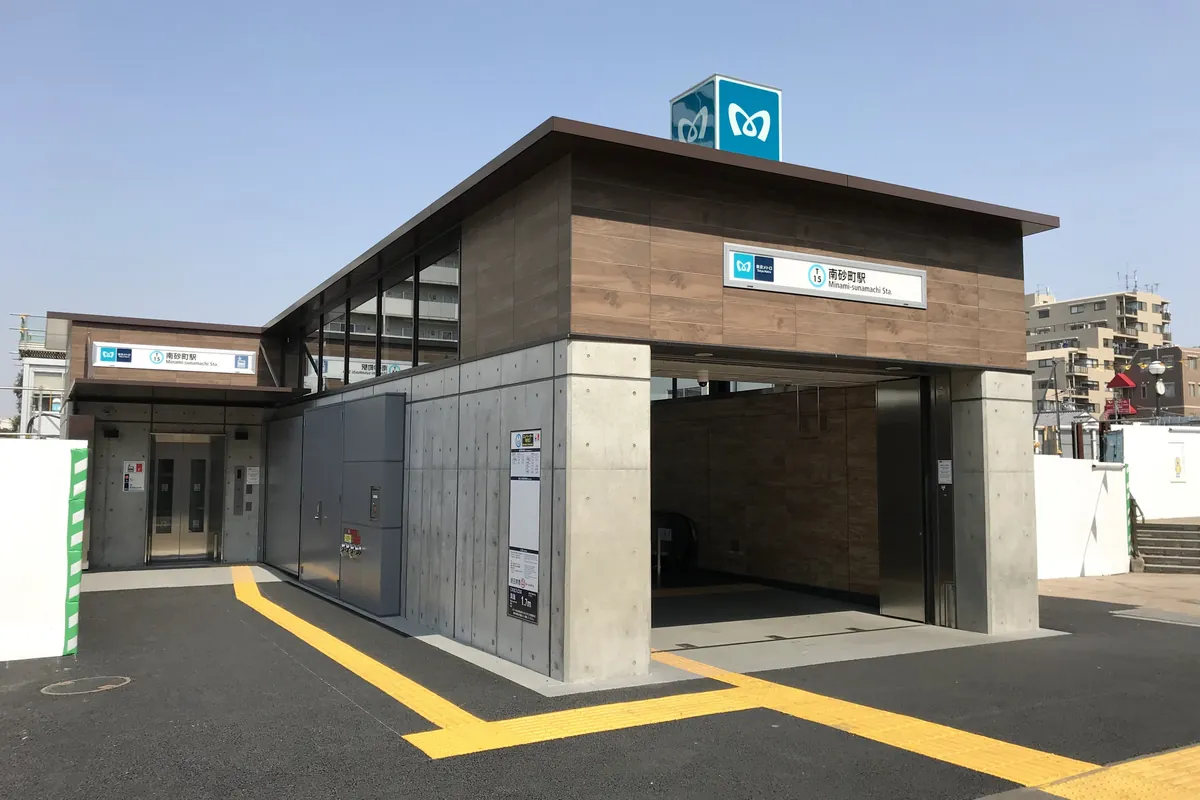
Two stations serve the street. Minami-Sunamachi is on the Tokyo Metro Tōzai line, which runs through central Tokyo from east to west by way of Ōtemachi and Nihombashi; Nishi-Ōjima is on the Toei Shinjuku line, whose western end is at Shinjuku. Both stations are in Kōtō ward, and neither sits on Sunamachi Ginza, so from either one you finish on foot. Japanese Wikipedia notes that the street lies away from the rail lines, which is part of why it has kept its neighbourhood character. Your booking confirmation carries the exact meeting point; check it before you set out.
By bus or taxi
Toei city buses stop right on the shopping street at Kitasuna 2-chōme, which is the closest public transport gets. Several routes pass it, so look up the current one from wherever you are staying. A taxi from Minami-Sunamachi or Nishi-Ōjima is quick and inexpensive, and is the easiest choice with small children or a wheelchair, though the lanes around the street are narrow.
The street itself
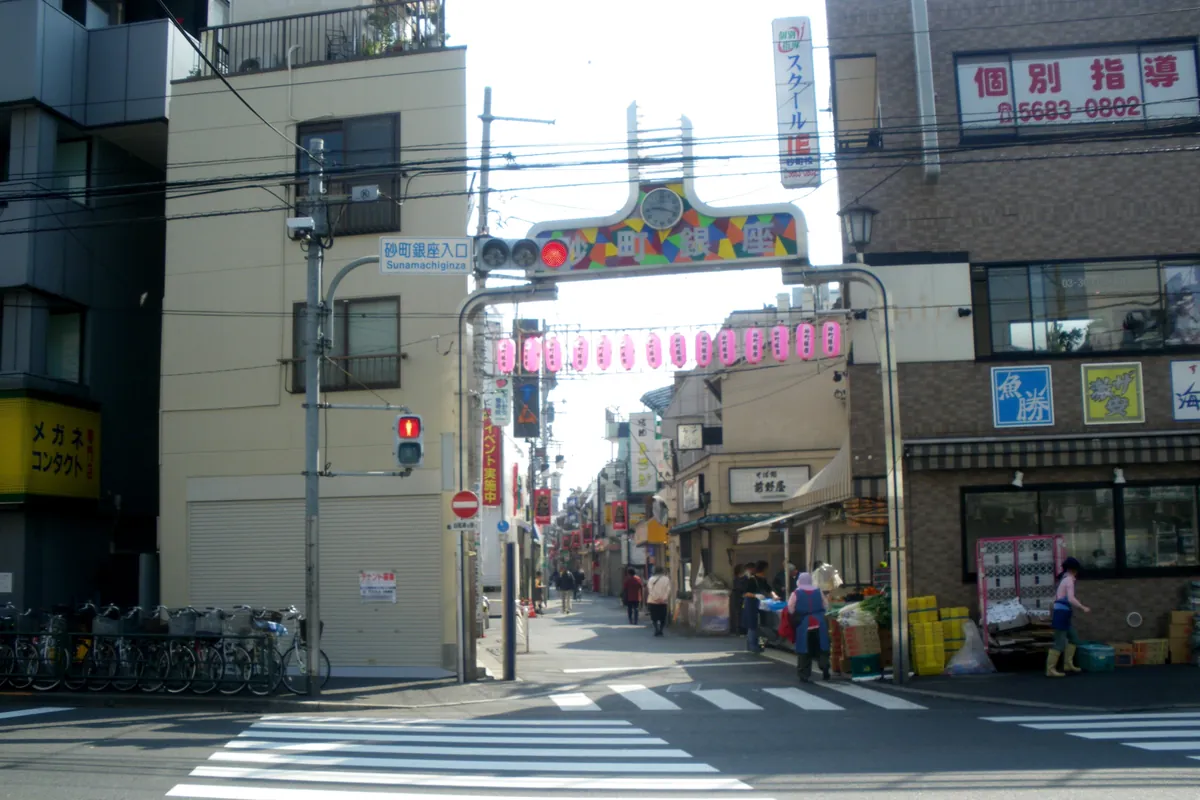
Sunamachi Ginza is a shōtengai, a neighbourhood shopping street of small specialist shops, running about 670 metres east to west in Kitasuna. Japanese Wikipedia records that it had around thirty shops before the war, was burnt out in the 1945 air raids on Tokyo, and grew back after the war into roughly its present shape by the early 1960s. It is counted with Togoshi Ginza and Jūjō Ginza among Tokyo's three great Ginza shopping streets, and holds a Tanabata festival in early August.
Eating before the ring
The sumo session serves no meal, so the street does the catering. Walk its length, buy what appeals from the shops and stalls, and carry it in to eat by the ring. A shōtengai like this one caters first to the people who live around it, so expect everyday food rather than a food court. Arrive early enough to browse without rushing, and remember drinks too. Smoking is not allowed inside the venue.
Before you set out
Check the meeting point on your booking confirmation, decide which line you will take from your hotel, and leave a generous margin: the walk from either station, and the time spent choosing food on the street, both come before the session's start time. Wear comfortable shoes. If you are travelling with small children or someone who uses a wheelchair, plan on a taxi from Minami-Sunamachi or Nishi-Ōjima, and expect the narrow lanes near the street to slow the last stretch.
Making a day of Kōtō
If you have time either side, the ward's older western half, the former Fukagawa district, holds Tomioka Hachiman Shrine, where the first sanctioned sumo tournament of the Edo period was held. Pairing the two turns a sumo afternoon into a day about the sport's roots in this part of Tokyo.
Frequently asked questions
Which station is nearest to Sunamachi Ginza?
Minami-Sunamachi on the Tōzai line and Nishi-Ōjima on the Toei Shinjuku line both serve it, but neither is on the street, so you finish on foot, by bus or by taxi.
Is there a bus to the street?
Yes. Toei city buses stop on the shopping street at Kitasuna 2-chōme.
Sources
- Sunamachi Ginza shopping street: Japanese-language Wikipedia entry, as read in November 2026
- Minami-sunamachi Station: English-language Wikipedia entry, as read in November 2026
- Nishi-ojima Station: English-language Wikipedia entry, as read in November 2026
- Kōtō: English-language Wikipedia entry, as read in November 2026