Start here
Sunamachi sumo: worth it with kids?
Whether the sumo session on Sunamachi Ginza earns a place in a Tokyo trip: the three half-hours, the ring challenge, food from the street, the walk and ages.
Reserve a place by the ring ↗Quick answer
Yes, for most families and first-timers. In about ninety minutes a host explains how sumo works, two former professional wrestlers train and fight a few metres from you, and anyone who wants to, children from four and women included, can put on a mawashi and step onto the ring. No meal is served: you buy food on Sunamachi Ginza first and carry it in. The station walk is a real walk, and the session is a demonstration, not a tournament.
On the ticket, or not
| This session | |
|---|---|
| Host in English and Japanese | Included |
| Training and bouts by two former pros | Included |
| Ring challenge in a mawashi | Optional, included |
| Photos with the wrestlers in the ring | Included |
| Food and drink | Bought on the street |
| Transport | Not included |
| Free cancellation | Up to 24 hours before |
The short answer
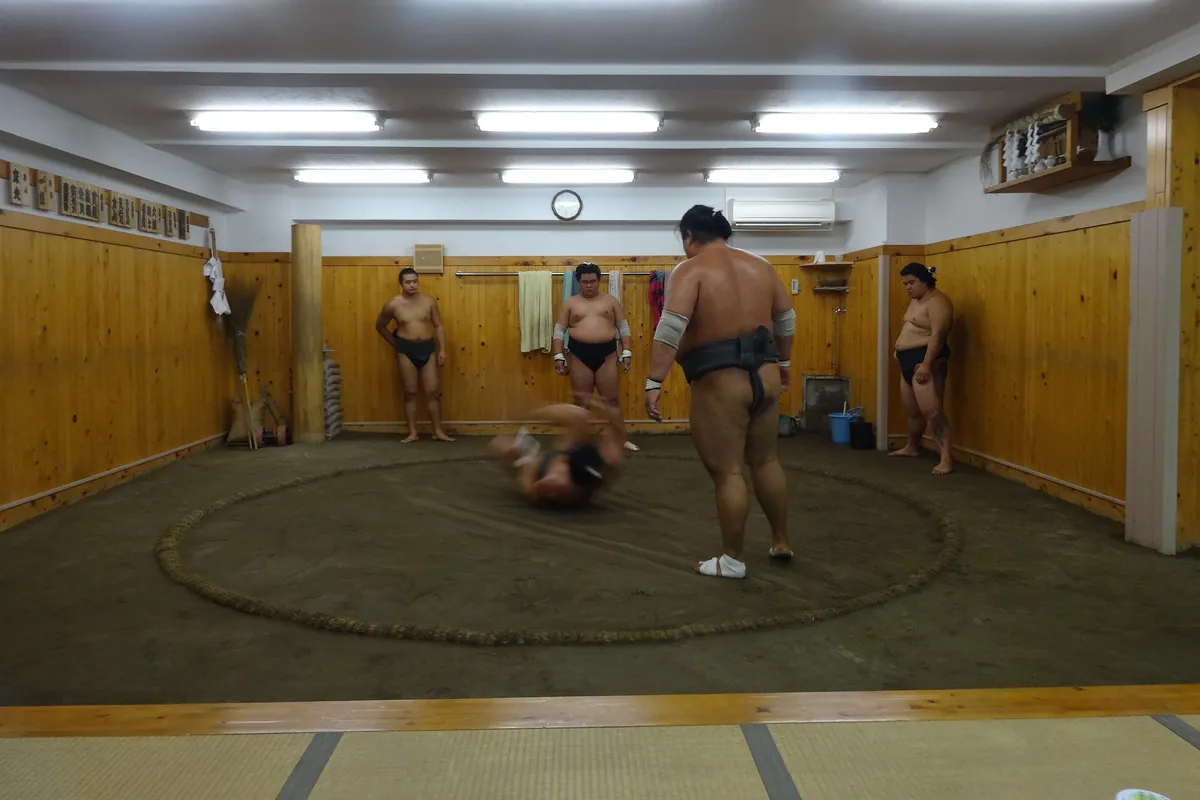
Book it if your group wants to see sumo at close range, would like a turn on the ring itself, and is in Tokyo outside the tournament months or cannot get tournament seats. The session lasts about ninety minutes and splits into three parts: an explanation of the sport, training and bouts by two retired professionals, and an optional challenge in which you wrestle one of them. Children from four can join in. Skip it if you want ranked wrestlers in a packed arena, a set dinner or a quick hop from the station, because none of those describe this afternoon on a Kōtō shopping street.
What happens in the ninety minutes
The first half hour is talk and demonstration. A host, speaking English and Japanese, covers where sumo came from, the rituals you will see, why salt is thrown into the ring and what counts as a win. The second half hour belongs to the two former professionals, who run through their training routine and then wrestle real bouts with no stage, rope or barrier between them and the audience. The last half hour is yours: volunteers change in a private area, tie on a mawashi and step barefoot onto the ring to take on a wrestler. Afterwards everyone may climb into the ring for photos and questions about the wrestlers' training and daily life.
The ring challenge, explained
The challenge is the reason many people book, and it is entirely optional. The venue provides the mawashi and a full changing kit, so you can arrive in whatever you like. Expect to lose: you are pushing against someone who wrestled professionally, and losing is part of the fun. If you would rather not wrestle, you can still step onto the dohyō once the bouts are over and pose with the wrestlers. That matters more than it sounds, because the professional sport keeps women off its rings entirely, a rule that goes back to Shinto and Buddhist ideas of purity. Here, anyone in the group can stand on it.
Is it good for children?
It suits children better than most ways of seeing sumo in Tokyo. Children aged four and over can take part, ring challenge included, and under-fours go free. Ninety minutes in three distinct parts keeps the pace moving, and the third part turns watching into doing, which is usually what younger children want by then. The setting is a small room rather than a stadium, so no one is far from the action and there is no long day of preliminary bouts to sit through. Let children decide about the challenge once they have seen the wrestlers at work; some will want a turn, others will be happier with a photo in the ring.
Food: you bring it from the street
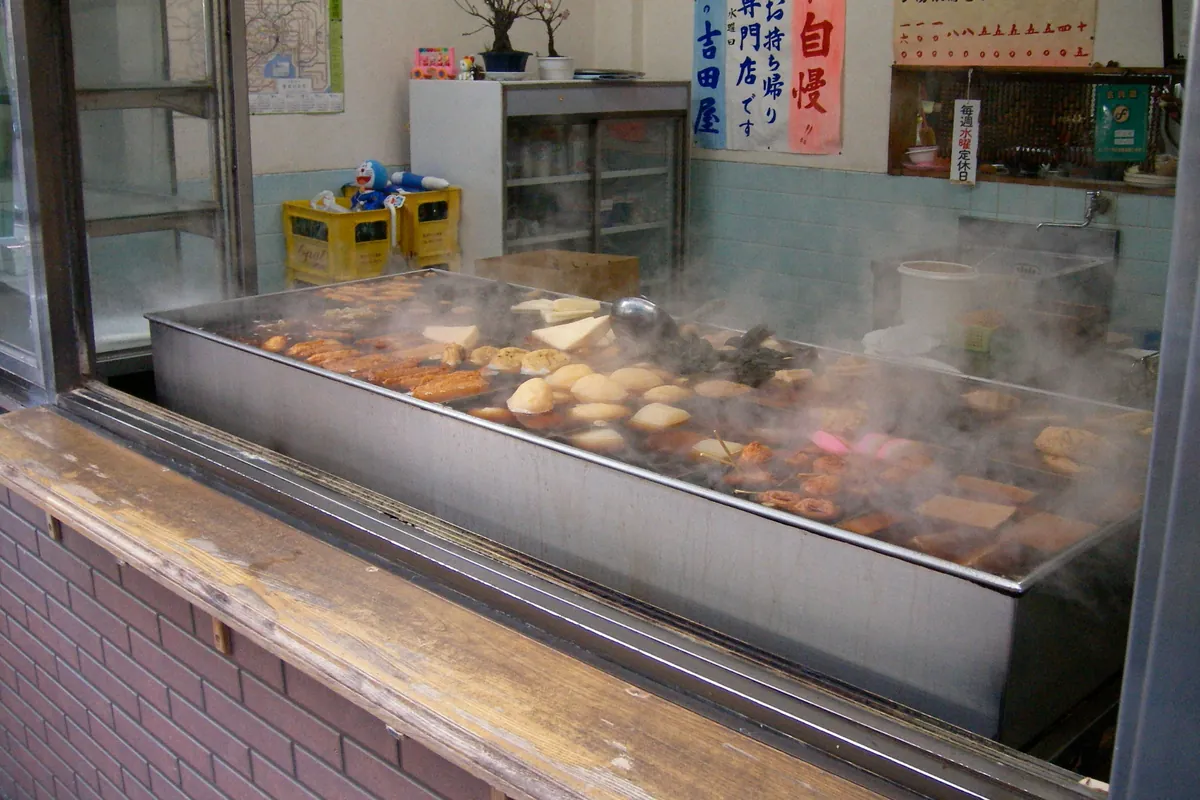
No meal is served, and that is deliberate: you are expected to buy your own on Sunamachi Ginza before the session and carry it in to eat by the ring. Arrive early enough to walk the street and choose. Japanese Wikipedia describes Sunamachi Ginza as a shopping street of some 670 metres running between two main roads in Kitasuna, and one that still keeps the look and feel of a Shōwa-era shitamachi street. It is counted, with Togoshi Ginza and Jūjō Ginza, among Tokyo's three great Ginza shopping streets. Drinks are your own as well, so pick something up on the way in.
The walk from the station
Plan the trip out, because the venue is not beside a station. The nearest rail stops are Minami-Sunamachi on the Tokyo Metro Tōzai line and Nishi-Ōjima on the Toei Shinjuku line, and from either one it is a proper walk to the street rather than a hop. City buses stop on the shopping street itself at Kitasuna 2-chōme. A taxi from either station is quick, which helps with small children or anyone who uses a wheelchair; the venue is wheelchair accessible, but the lanes around the street are narrow. Your booking confirmation carries the exact meeting point. The guide to the street and stations has more detail.
Read next: Sunamachi Ginza: street and stations
Not a tournament, and why that matters
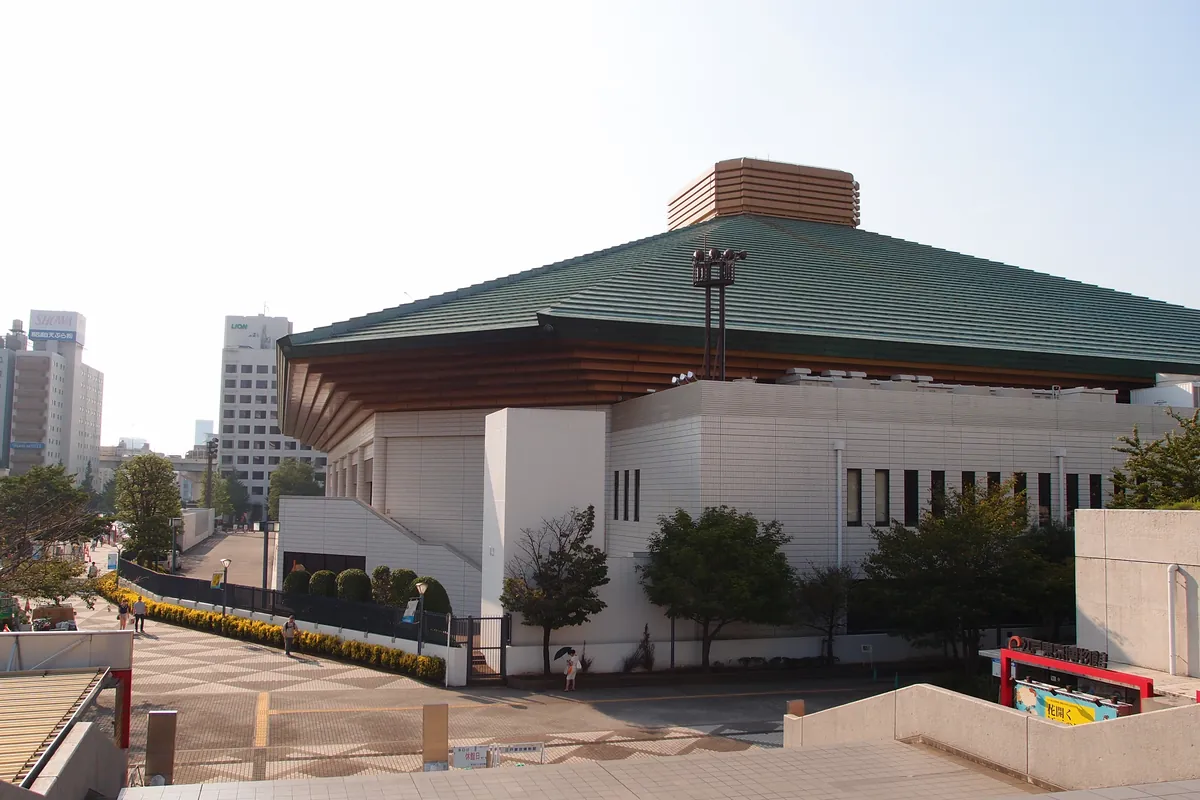
Professional sumo is decided at six grand tournaments a year, each fifteen days long. Three belong to Tokyo and the Ryōgoku Kokugikan, each January, May and September, while Osaka (March), Nagoya (July) and Fukuoka (November) take one apiece. Outside those weeks there is no ranked sumo to watch in Tokyo. The Sunamachi session runs most days all year, so it fills that gap, but it is a different thing: two retired wrestlers in a small room instead of a full day's card and a crowd of thousands. If your trip lands in a tournament month, you can do both. The tournament-months guide covers the calendar.
Read next: Tokyo sumo outside tournament months
Who this isn't for
Look elsewhere if you want the spectacle of a grand tournament, with ranked wrestlers, ring-entering ceremonies and a hall full of fans; that only happens during the tournament weeks. It is not for anyone who wants dinner included, since the food is yours to buy. It will frustrate a group in a hurry, because the venue sits a walk from the trains in a residential part of Kōtō. And it suits curious first-timers better than devoted fans who already follow the rankings, as the first half hour starts from the basics.
How to book well
The session holds at most forty guests, and each slot's start time is listed in the calendar, so choose one that leaves time to shop on the street first. GetYourGuide gives a full refund on cancellations made a day or more ahead, and lets you hold places without paying at once, which helps while the rest of a family trip is still moving. Count children carefully when you book: under-fours go free, but from four upwards each child needs a place. Wear comfortable shoes for the street and bring a camera for the photos in the ring.
A plan for the day
The session fits a half day in Kōtō. Arrive with time to browse Sunamachi Ginza, eat by the ring, then spend the rest of the day in the ward's older western half, the former Fukagawa district. Tomioka Hachiman Shrine there is where the first sanctioned sumo tournament of the Edo period was held, and its grounds keep a stone inscribed with the names of the yokozuna. The guide to Kōtō's sumo history explains why the ward matters to the sport.
Read next: Kōtō and the birth of pro sumo
Frequently asked questions
How long is the Sunamachi sumo session?
About ninety minutes, in three parts of roughly half an hour each: an explanation of sumo, training and bouts by two former professional wrestlers, and the optional ring challenge, followed by photos in the ring.
What is the minimum age?
Children aged four and over can take part, including in the ring challenge. Under-fours go free.
Can women and girls step onto the ring?
Yes. Anyone in the group can stand on this dohyō and take part in the challenge. Professional sumo does not allow women into the ring.
Do we have to wrestle?
No. The ring challenge is optional. Spectators are welcome to stay put, then join the photos on the ring once the bouts end.
Is food included?
No. There is no set meal. Buy food and drinks on Sunamachi Ginza before the session and bring them in to eat by the ring.
Is it a real tournament?
No. It is a demonstration by two former professional wrestlers in a small venue. Tokyo's grand tournaments are held at the Ryōgoku Kokugikan in January, May and September.
Sources
- Japan Sumo Association, English site (tournament schedule)
- Sunamachi Ginza shopping street: Japanese-language Wikipedia entry, as read in November 2026
- Sumo: English-language Wikipedia entry, as read in November 2026
- Dohyō: English-language Wikipedia entry, as read in November 2026
- Ryōgoku Kokugikan: English-language Wikipedia entry, as read in November 2026
- Kōtō: English-language Wikipedia entry, as read in November 2026